
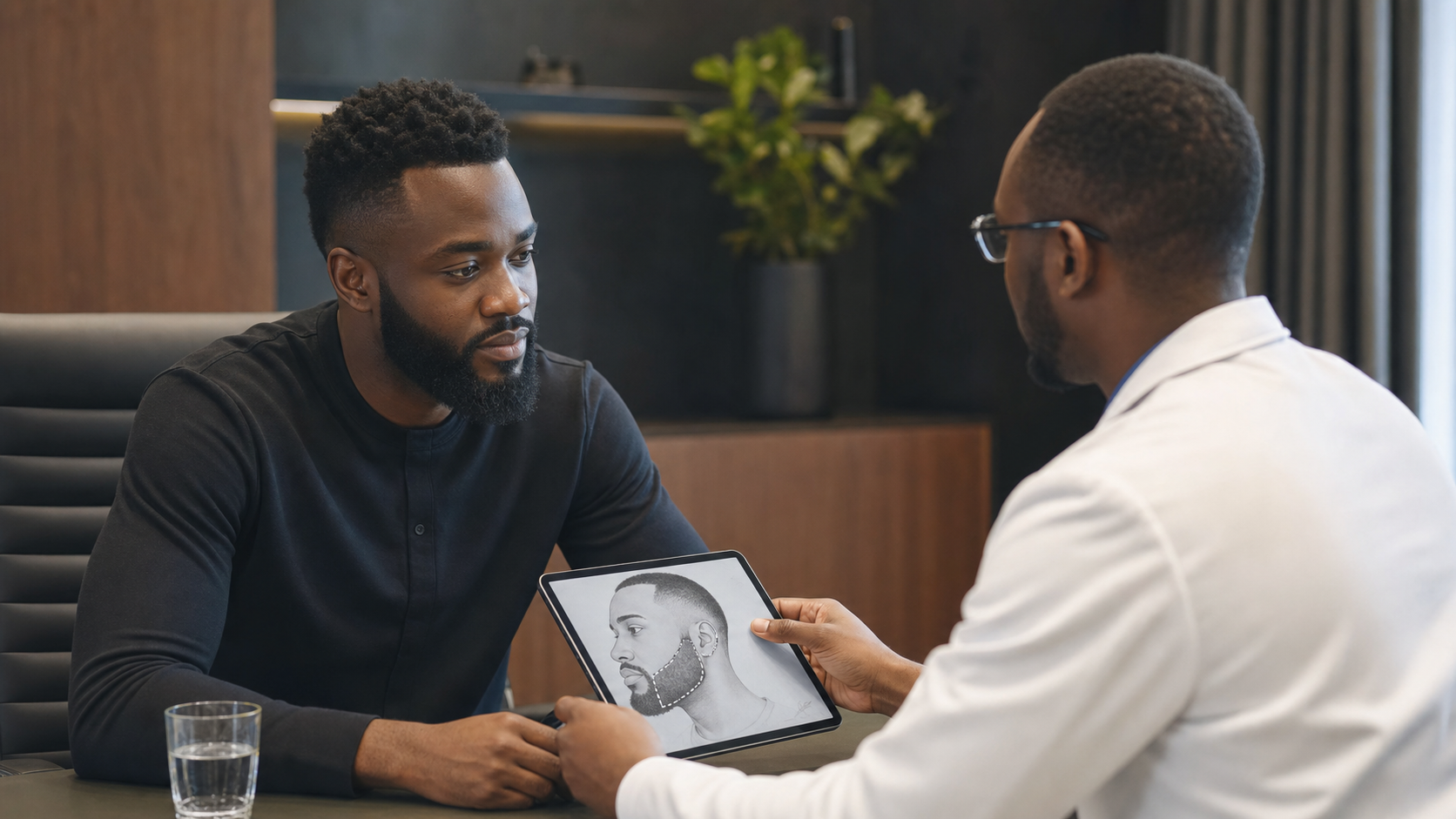
Start with the shape you actually want to live with.
Patchiness can mean different things to different people. One person may want a slightly stronger cheek line; another may be concerned about a thin goatee, an uneven jawline or a scarred area. A good conversation turns that broad concern into a restrained design goal. More density is not automatically a better result if the outline, facial proportions and natural growth direction are ignored.
What a beard plan should consider.
- Facial balance: the cheek, jaw and moustache areas should work together rather than look separately filled.
- Hair direction: placement needs to follow a believable angle and pattern.
- Existing density: the plan should blend with the hair you already have.
- Donor planning: donor hair is a limited resource and needs to be assessed carefully.
The donor conversation matters.
Every transplant plan depends on the available donor hair and the areas being considered. A responsible assessment is where the clinic reviews whether the donor supply and the design ambition make sense together. It is also the right time to ask how the plan fits with your haircut, grooming routine and long-term expectations.
Recovery needs its own plan.
Aftercare is part of the experience, not an afterthought. Your treating team should give you individual guidance about cleaning, activity, touching the area, shaving and follow-up. Recovery varies, so online timelines should help you ask better questions rather than replace the instructions you receive for your own case.
A beard restoration discussion should feel measured. If the plan is not explaining design, donor supply and aftercare, it may not be giving you enough information to make a calm decision.
Questions to ask before you decide.
- What shape and density would look natural for my face?
- How will the implanted hairs follow a believable direction?
- What does my donor assessment show?
- What aftercare and review support should I expect?
Common questions.
Can a beard transplant address patchy growth?
It may be considered for some people, but the discussion should begin with the specific area, the desired appearance and whether an individual donor assessment supports the plan.
Will the result look natural?
Natural appearance depends on planning: the outline, density, placement angle and how the new hair blends with existing growth all matter.
Is beard restoration the same as a scalp transplant?
Both involve individual planning, but facial proportions, visible direction and grooming habits make beard design its own conversation. Read more about our Beard Restoration service.